Where did you get the idea to do this?
February 3, 2026This is a good moment to consider the transition from Johnstown Industry to Johnstown Waters. Which is another way of asking a question I frequently encounter: “where did you get the idea to do this?”
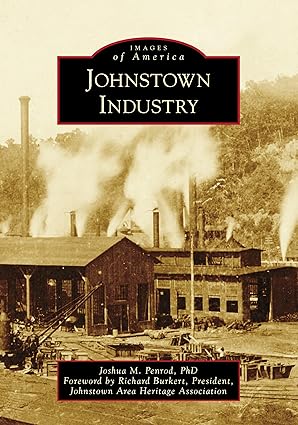
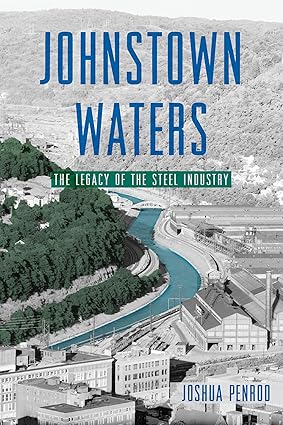
Well – as noted in earlier entries, the genesis of Industry came about as a result of an awakening to loss of heritage, which resonated with deep worry for me. If I were to surmise something, it’s the recognition that the “love letter to my hometown” in the form of the first book was not the final statement on that matter.
It came up in the most prosaic of ways: that of reading a newspaper article. I’ve known of many writers that can extract dozens of ideas from a single newspaper page, and while I’m not quite that prolific, I generally don’t have any problems asking questions that would prompt a potential writing opportunity. These consist of the old journalist one-word questions of what, when, why, and how.
In the case of Johnstown Waters, it was the typical small-town newspaper article reporting on a water pipe replacement from the Quemahoning Dam. As prosaic as that might be, I was also admittedly a bit tuned into the questions regarding infrastructure and social technologies given my doctoral program. Again admittedly – there aren’t a great many people out there that would read an article on the replacement of a water pipe and use that as a seed for a book.
The difference, however, is that the pipeline is massive. That’s what caught my attention – there was a mention in the article of a pipe that was over 60 inches wide. Now, I’m not a plumber, much less a hydrologist, but I did recognize that to keep a pipeline that big pressurized was going to take a lot of water. This led, of course, to the inevitable Google searches where I started to sound out the dimensions of the water system and, importantly for the purposes of the book and its scope, its history.
I hadn’t known, for example, that a steel mill needed water to make steel. I mean – in retrospect, of course it does, but what I hadn’t realized was the extent of the necessity. And so that led to investigations of the system itself, from a hundred or more years in the past, where I really learned that Cambria Iron/Cambria Steel was the entity responsible for the construction of many dams in the area, building what is called the “industrial water supply” for the needs of steel production.
As it turns out, when you make a lot of steel, you need a lot of water. In short order, I learned that the Quemahoning Dam holds around 12 billion gallons of water and was, upon its completion, the largest man-made lake in the Commonwealth. (It would be bested by Lake Wallenpaupack in the northeastern part of the state, built in the 1920s.) The Que wasn’t the only reservoir, however: there were a number of others, including Wilmore and Hinckston Run. And with the Wilmore Dam, there had been recent events with a flooding panic in the remnants of Hurricane Ida in September, 2021, which presented an abundance of new history and fresh articles. And for the Hinckston Run Dam, there was the tragedy of the 1923 intimidation campaign run by then-Mayor Joseph Cauffiel with help from his allies in the Ku Klux Klan to drive Black and Mexican citizens out of the city (along with the nefarious character of John Hinckston himself, an early frontiersman, notable for his extraordinary moral ambiguity, from fighting for the American side during the Revolution and also for the cold-blooded murder of a fishing Indian named Joe Wipey…indeed, it may have only been for the murder arrest warrant posted by the British colonial governor of Pennsylvania that Hinckston joined in the fight for the American side.)
And that is, literally, how history gets made…oftentimes though horrific events and oftentimes by odious persons. It isn’t just the news, I suppose, where the axiom of “if it bleeds, it leads” takes priority of place. Such a term isn’t always literal, of course, but there’s something else journalistic, or even at the basis of telling any story: the hook.
“Why” is the ultimate question behind writing about history. It’s fine to know dates and to be able to reconcile events, but the real work is sorting through mountains of conflicting (and often irrelevant) evidence to understand forces, processes, and conditions of chance that create the events that occur on those certain dates. This is also the critical aspect of where one can get ideas: one needs to sense that an investment into a “why” means that there’s a story present. For my so-called “Johnstown trilogy,” the where and the why combined to create the goal, structure, and outcome of each of the books.
Since the “where” is Johnstown, the “why” comes from: a) Johnstown Industry: the transformation of the character of the city from its industrial heyday to its postindustrial form; b) Johnstown Waters: why was this water pipeline being replace? Why was it so big? (And then, where did it come from, why, where, how, when, etc – a fractal or, more accurately, a recursion); c) These Restless Hills: why is Johnstown and its area so prominent in industrial history? (A lot more to say on this one in due course!)
I’m working on another nonfiction book featuring Johnstown now; I’m not going to say too much about it at this point, other than to say that I’m learning even more new things about the history of the city and the craft of writing about it. With any luck, the “Johnstown trilogy” will soon be the “quadrilogy.”
Why? We can look to the where.