Problems with Design, Problems with Technology — When Great Cars Go Wrong
July 20, 2026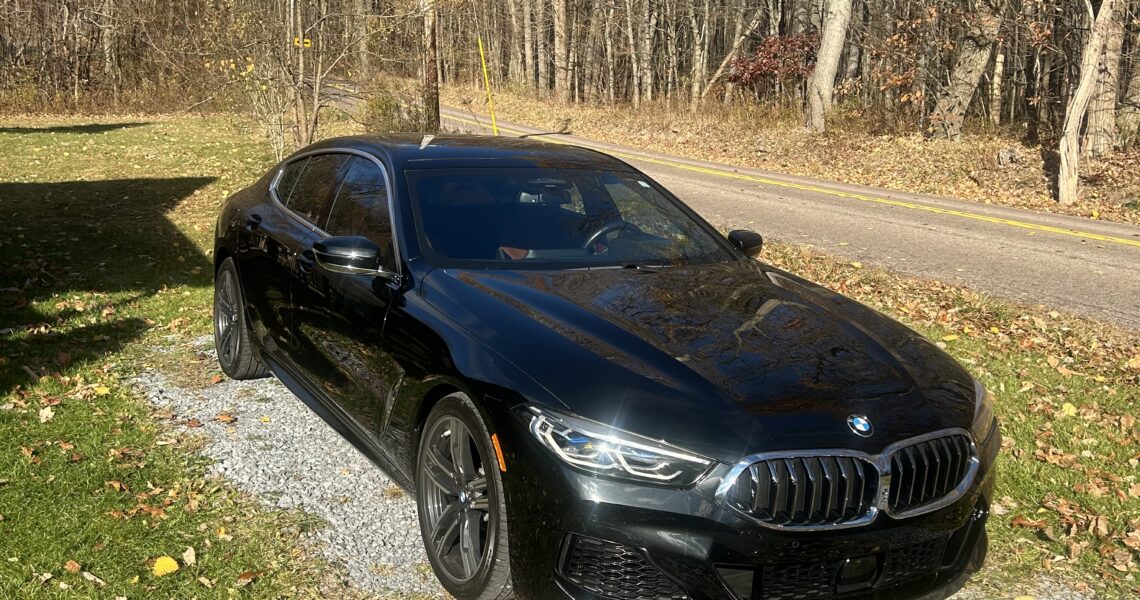
One of the cars that I’ve owned, overladen with technology and somewhat critically panned because of its perceived in-betweenness is my lamented M850i Gran Coupe. I REALLY liked that car. It was panned because it was too big, it was an M-sport rather than a “true” M car, and it didn’t have M chops while the perception was that it had pretensions of being an M car.
Here’s the thing – it was a big bruiser of a sedan with a great (if synthesized) exhaust note in Sport Mode, handled its bulk extremely well, and fast enough to either gap or un-gap most anything else. It was a great car for my purposes, particularly adept at adverse conditions and all-weather, high-velocity missiledom. So why is it no longer in the fleet?
The damn thing couldn’t stop eating its own tires.
I had three catastrophic tire failures in 11 months. One was so bad that the run flat failed, destroyed the passenger side fender liner, and proceeded to shear part of the wiring harness. That was a $12,000 repair bill mostly footed by my long-suffering insurance company. Now – two of these three failures were most assuredly caused by hitting a pothole which, in Pennsylvania and Maryland, is about as certain a daily occurrence as one could get.
Not only that, on the third failure (possibly a pothole, but unknown), I was confronted by the supply chain’s inability to procure a tire and get me back on the road in fewer than two days. That included a BMW dealership, two national tire and battery replacement chains, and a massive Ford dealer. No one had the tire. All could order the tire.
My response, simmering in the juices of my frustration, was basically “fuck this” and I traded the BMW, flat tire and all, on an Ineos Grenadier which is almost the exact opposite of the M850 in almost every conceivable way (except for the ZF 8-speed automatic transmission and the BMW-built powerplant.)
I also wrote a two-page, single-spaced letter to BMW customer service explaining my dissatisfaction with the car and my resolution of it (by going to a competitor). It is telling that BMW does not seem to provide a customer service email address for complaints, so we used the old technology to describe our issue. I suppose the coin of the realm these days is to post a Reel on Instagram describing one’s frustration.
I did get a response from BMW, which was a phone call from their customer service line. Unfortunately, the connection was so poor that I could only get about 60% of the message no matter how many times I replayed it. It was, in essence, almost the perfect and very nearly paradigmatic customer service response from a large company that one has grown to expect in this third decade of the 21st century.
The issue is one of form following function…at least, this is my estimation of it. The BMW had very low profile tires on very large wheels, which made the effective sidewall flex a measurement best taken by atomic microscopes. This equates to one thing: failure.
One cannot possibly square this circle with common sense. The car “looked cooler” in the eyes of the design team with wheels that make the car prone to failure. To add insult to injury, the ecosystem of equipment and parts to service the car was not up to the task of remedying the foolhardy decision that led to the wheel design.
Not every sports or high-performance car is going to be reliable, of course. We know this well – machines built to narrower tolerances with systems designed to extract more performance are going to be more prone to breakage. Being intentionally stupid, however, and ruining the actual use case of the car, is not in the same realm. There’s nothing that would have compromised the function of the car by having a set of wheels and tires that allow the vehicle to function in a less-than-perfect environment.
And by the way, that less-than-perfect environment happens to everyone driving today.
Some of my experience with that car was, of course, bad luck. I have, however, hit many potholes in my time. When one lives in Pennsylvania, that is as certain as anything in life. The experience with my M850 was the only time where it basically made the car as unusable on the road as an F1 car. The M850 was great – but it’s no F1 machine.
And that’s just the point – it isn’t a purpose-built race car. It was a big, comfortable, powerful GT cruiser adept at soaking up the miles. One little subjective and largely unnoticeable design feature fatally compromised it.
What does this mean in terms of customer lifetime value for my relationship with BMW? I honestly don’t know. I like many BMWs, of course – but anyone, including BMW corporate, can place a bet on whether I’ll remember that unfortunate experience when it comes time to perhaps purchase another. It’s not going to happen anytime soon.
For all of the vaunted technology within the BMW, with its temperature management, the chassis, the ECUs located all over the car, it was BMW design’s primary take on the oldest design in human history – the wheel – that ruined a technologically advanced and extremely capable car. After thousands of years of design and development, one would have thought that the wheel had been pretty much solved as a problem. That is apparently no longer the case. In this way, technology isn’t advancing. It’s reversing.