Newtown Battlefield, New York
August 29, 2026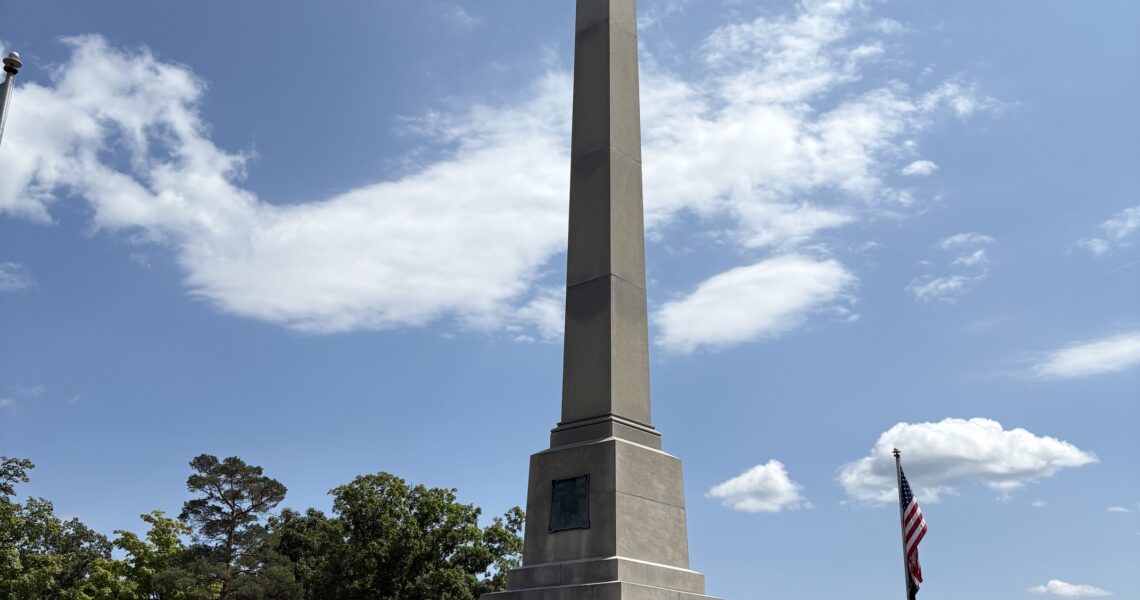
Even in a country as young as the United States, one can forget about an important battle. By important, I mean – something changed, and usually someone was killed. Anything that costs a life is worthy of remembering irrespective of moral causes. To lose one’s life is to lose everything. The instinct for self-preservation, for evading danger, is nearly overwhelming. There are other drives, of course, which cause us to ignore risks or to absorb them: love, perhaps…or treasure.
I’m not parsing words or engaging in theory here – this is, in part, a meditation on what causes people to walk toward gunfire for an abstract cause: political independence, perhaps. I would suggest that this action is an extraordinary one. The cost of getting there staggers one’s contemplation when you think about it, which was something that occurred to me when visiting the Newtown Battlefield in the Southern Tier of New York, near Elmira.
There’s not a whole lot to see there from an explanatory standpoint. The battle was not excessively large, though it was decisive. A group of Crown loyal fighters, consisting mostly of Haudenosaunee – more accurate than the generic “Iroquois” – Native American warriors, Loyalist colonists, and a couple dozen British regulars, faced off against more than 3000 Colonial troops who were marching northward to Elmira, using the Chemung River valley as a pathway. The Crown’s forces amounted to a few hundred men.
They hoped that by deploying the geography around Newtown, they’d be able to at least inflict considerable damage on the Continental side. The latter, led by General John Sullivan and ordered by George Washington, marched toward Elmira during the middle of what a milder military strategist might term a “punitive campaign” and what others have labeled as genocide.
The Loyalist-Indian forces positioned themselves around the settlement, but below the prominent ridge overlooking the Chemung Valley. This hill would later be called “Sullivan’s Hill,” and that is a significant clue as to what happened next. The Loyalist/Indian contingent set up in several chokepoints that Sullivan’s army would have to traverse in order to continue their march. The Crown’s side disagreed about whether to stage the fight there, but they eventually decided to do so, though they were short on time. They rushed to set up cover, a “fort” barely more than stacked logs, where they could have both observation and initial contact.
Sullivan’s group contained veterans, and they were no fools. They quickly realized what the landscape was funneling them toward and their scouting missions spotted the defensive perimeter. The Loyalist attempts to lure the Continental side in were futile, and Sullivan, along with his staff, developed an attack plan that was likely too complex and too smart by half, and the coordination that they had intended did not manifest. The Continental side, however, got enough artillery and firepower to not only not fall for the ambush attempt, but repelled and expelled the defenders entirely. The miss was that the advance slowed when encountering thick and heavy marshland, which meant that there was an escape route for the Loyalist/Indian side, which they quickly took.
If they hadn’t, they’d have almost certainly been buried there, if they’d been buried at all.
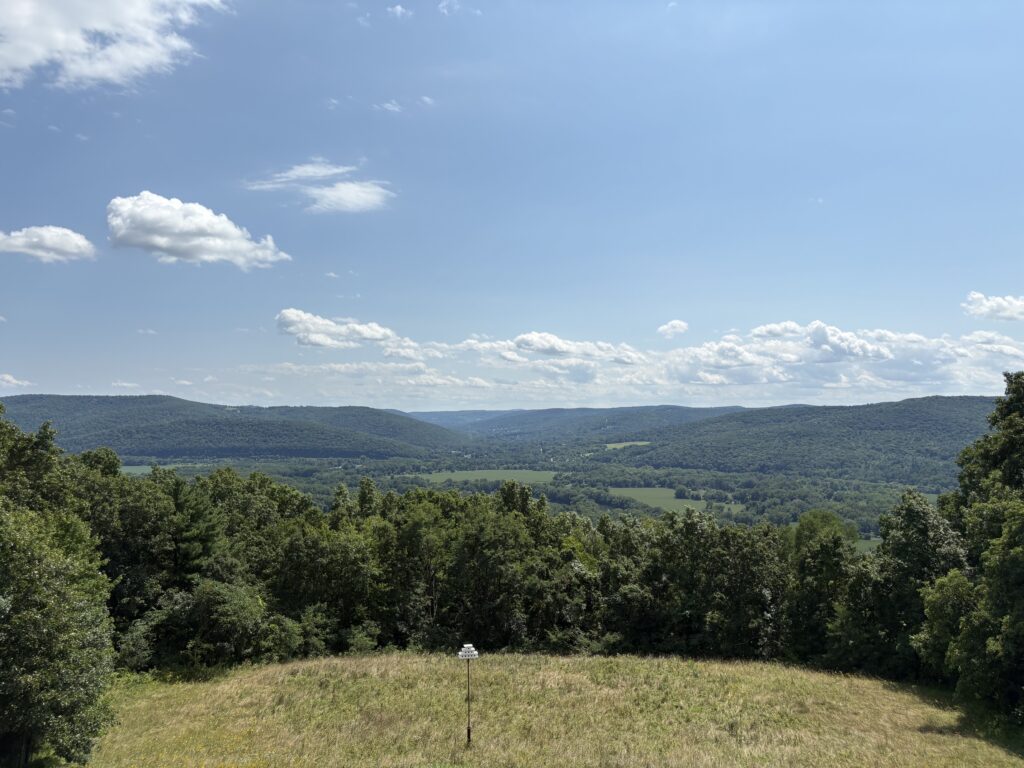
There’s not much around the area, so those expecting interpretive exhibits like what one would see at Gettysburg or even Fort Ligonier should likely lower their expectations a bit. The engagement here was short and scattered, and it was also decisive. Sullivan’s punitive expeditions continued toward the Finger Lakes. Depending on one’s perspective, his resoluteness and brutality were both profound. The Sullivan campaign, however, was not predicated on empty malice; Loyalist-Indian forces had conducted raids and massacres at Cherry Valley, New York, and Wyoming Valley Pennsylvania. Washington had ordered Sullivan to make the enemy pay.
He did.
When one strips away the patina, one can see what was happening here: a campaign of unrelenting harshness. At the time, none of these were the romantic causes that we inscribe on it from the comfort of two and a half centuries later. There would have been heat, smoke, deafening gun and cannon fire, hand-to-hand combat, blood, viscera, screams, amputations, burns, wailing, hatchets, knives, missing eyes and scalps. The campaign through central New York was not just Sullivan and Continental forces liberating New York from the Empire. Following Newtown, in village after village, children and women would be put to the road, if they survived the encounter at all, their homes and belongings burning behind them, their remnants now smoke reaching into the summer sky.
There was no romance here. There was a cause…and, irrespective of the rightness of that cause, there were also costs.